


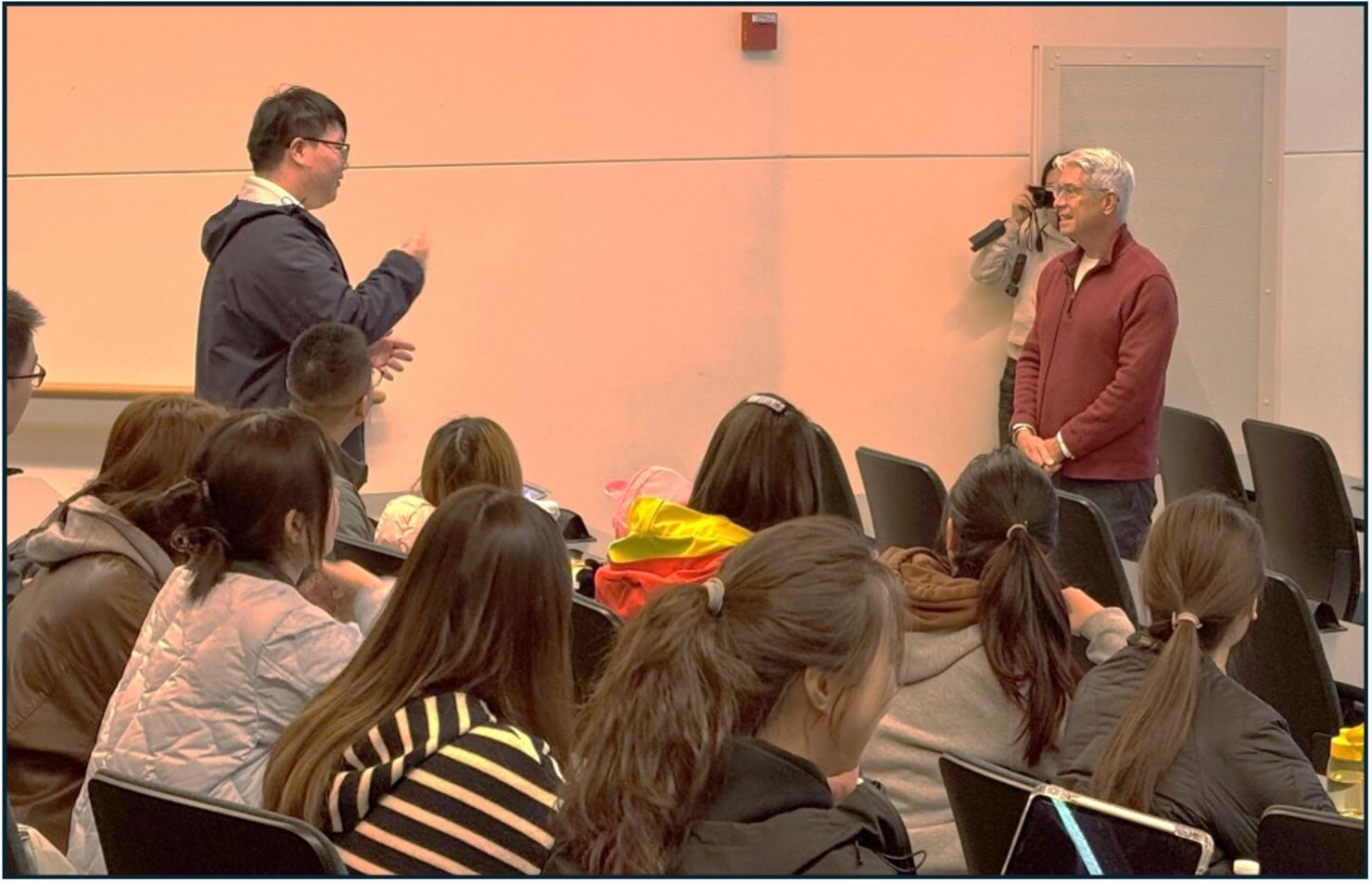
Dean Stetter greets students on first day of conference.
Our opening speaker, Dr. Mark D. Stetter, Dean of the UC Davis Weill School of Veterinary Medicine, welcomed the students to campus with his warm and engaging style. The students eagerly responded to his questions about their majors, setting a tone of enthusiasm and curiosity from the very beginning.
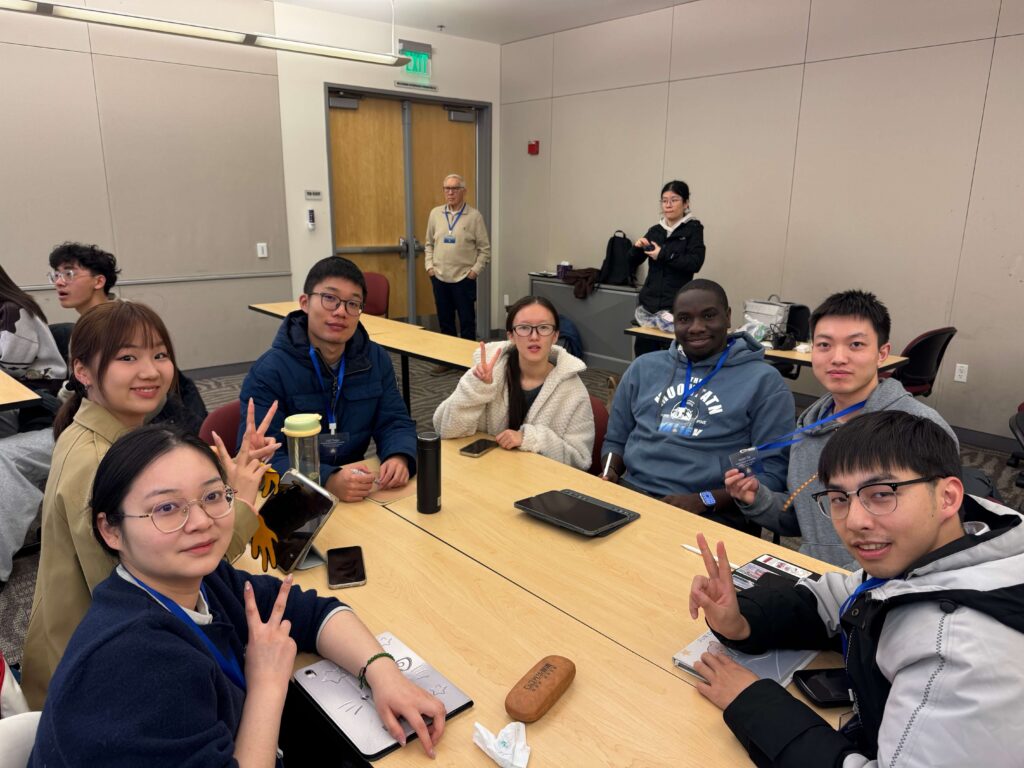
The students represented a wide range of academic disciplines, including veterinary medicine, ecology, animal science, food science and technology, agricultural economics, plant pathology, companion animal science, English language and literature, plant nutrition, and English. This diversity reflects the very essence of One Health education. Bringing together students from different fields of study and universities created opportunities for new perspectives, meaningful collaboration, and lasting friendships. Working in interdisciplinary teams, they would soon tackle the challenge of developing a final project that addressed a complex One Health issue affecting the health of people, animals, plants, and the environment.
Dr. Bennie Osburn, Director of Outreach and Training at WIFSS, provided an overview of problem-based learning to address global One Health issues, with a focus on food systems. Food safety is a powerful example of the One Health approach in action. Protecting the food supply from the soil to the consumer depends on experts working together across fields. Investigating and preventing foodborne illness outbreaks may involve water quality scientists, veterinarians, epidemiologists, microbiologists, toxicologists, plant scientists, soil scientists, and public health officials. By combining their expertise, these professionals can identify sources of contamination, protect public health, and strengthen the safety of our food system. Dr. Osburn concluded his opening remarks with our conference motto –
“We educate people, because people change the world.”
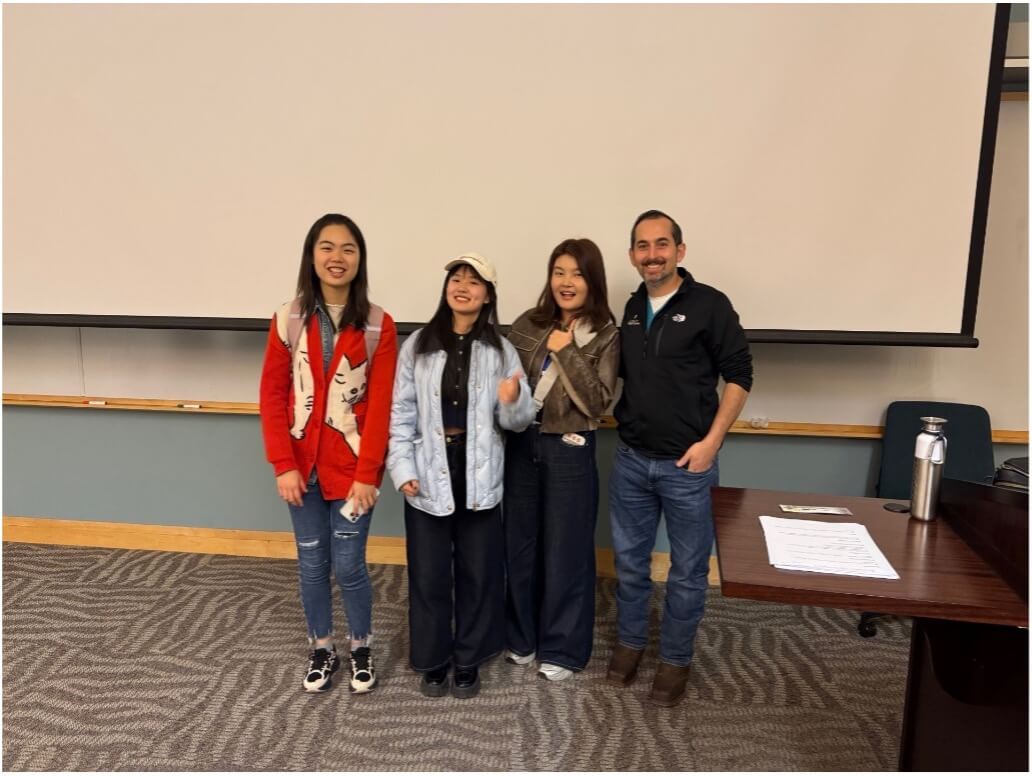
Dr. Richard Van Vleck Pereira, Clinical Livestock Herd Health, SVM, UCD meets with students following a lecture on the School’s Integrated Dairy Herd Health Program. The opportunity for students to interact with faculty on specific topics helps build confidence and in depth understanding of their expertise.
We educate people through a three-fold mission which includes: 1) raising awareness, 2) team building, and 3) a call to action.
We believe understanding the role of the environment, people, and animals in a complex problem requires an acute level of awareness. Lectures by world renowned professors and key subject matter experts provide an exercise in critical thinking from a multidisciplinary approach, aiding students in taking creative approaches for addressing important societal problems. Our innovative, interactive, and student-centered conferences are rooted in the knowledge of the interdependence of human and natural systems and promoting interdisciplinary collaboration. Some of the global issues One Health works to address include environmental contamination, habitat use conflicts, biodiversity loss, emerging infectious diseases, antimicrobial resistance, ecosystem function degradation, and food safety and security.
In addition to classroom lectures and team building activities, students attend a one-day field trip that provides the opportunity for a hands-on learning experience that highlights the connection between ecosystems, plants, animals, and humans.
Team Building
One Health breaks down traditional academic and professional silos by bringing together experts from diverse disciplines to solve the complex challenges that arise at the intersection of human, animal, and environmental health. Collaboration is not simply a goal of One Health—it is one of its defining strengths.
This multidisciplinary approach is a cornerstone of our conferences. As students from different universities and academic backgrounds work together throughout the program, they build confidence, develop trust, and learn to value one another’s unique perspectives. By the end of the conference, these new partnerships are evident in the way the teams collaborate on their final projects.
Each team selects a One Health issue that is meaningful to them and develops practical recommendations to address it. Their projects include both short-term strategies to meet immediate needs and long-term solutions designed to create lasting, sustainable improvements.
Our team-building activities would not be possible without the leadership of UC Davis post-graduate students such as program facilitators: Taotao (Andy) Lu, lead coordinator for UC Davis team facilitators, MPVM, PhD candidate in Epidemiology; Ruwini Rupasinghe, VVSc, MPhil, MPVM, Phd and Post-doc in Epidemiology; Cheng-Hong (Philip) Chi, DVM, PHD student in Epidemiology; Henry Wamala, BVM, MPVM, PhD student in Epidemiology; and Yasmin Moghaddamziabari, who inspired and encouraged teams Penguin, Vetogether, Prone Health, and VEEF for One Health.


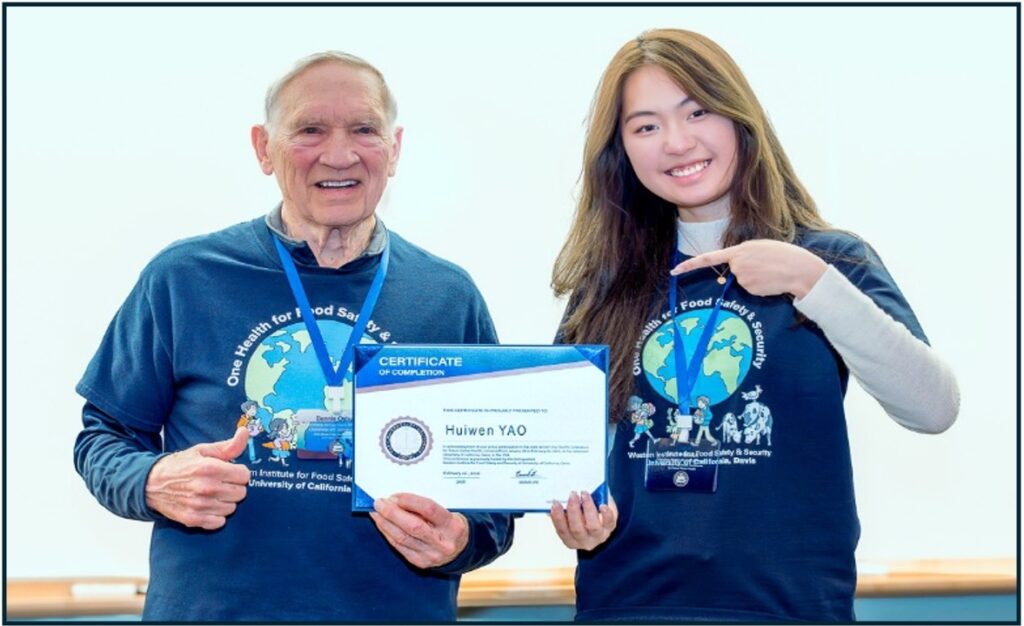


Dr. Jorge Rodrigues involves students during lecture on “Soil Health: Linking Ecosystem Health to Human and Animal Health: The Challenges and Opportunities.”
As a veterinary student, Wenxi (Zoe) Song, is specializing in Preventive Veterinary Medicine. She found multi-dimensional research methodologies—which address real-world clinical issues through the lens of One Health—to be particularly illuminating. A compelling example was provided by Dr. Jorge Rodrigues, a professor in the Department of Land, Air and Water Resources at UC Davis during a discussion on ‘how to measure the happiness of soil.’ Not only did his presentation effectively quantify the intricate relationship between microbial communities and soil health but it also served as a perfect example of ‘Improving Scientific Communication,’ a concept emphasized in a lecture given by Heather Johnson, an Instructional Systems Designer at WIFSS. This perspective has significantly deepened Zoe’s understanding of the fundamental impact that microorganisms exert on the synergy between humans, animals, and environmental well-being.

Group project
Zoe and fellow team mates on Team Penguin addressed the escalating threats that global warming poses to global food safety. They systematically examined how rising temperatures and erratic climate patterns disrupt biological ecosystems, leading to the proliferation of foodborne pathogens and the contamination of water sources. By tracing the chain from the drivers of global warming to specific climatic shifts, they illustrated how environmental degradation directly compromises the integrity of the human and animal food supply.
For short-term goals, the team seeks to raise public awareness regarding low-carbon lifestyles and their direct connection to food safety. By educating consumers on how individual carbon footprints contribute to climate shifts—and subsequently to the rise of foodborne pathogens—we aim to foster more sustainable consumption habits.
Team Penguin envisions a long-term goal to establish a resilient global food system through multi-sectoral collaboration and to mitigate the fundamental drivers of climate change.
Call to action
As Zoe put it, “We advocate for a ‘One Health, One Action’ approach: calling on individuals to reduce their carbon footprint, while urging policymakers to integrate environmental health data into national food safety surveillance systems.”
Zoe’s research
Zoe’s research focuses on wildlife pathogen surveillance within the field of veterinary public health. Through this learning experience, she has come to recognize the importance of integrating environmental factors into the analysis of pathogen transmission pathways. For instance, areas with clean water sources and abundant vegetation often exhibit higher wildlife diversity, which suggests a heightened risk of cross-species transmission. Additionally, the interface between captive and wild animals serves as a critical junction. Captive animal enclosures, due to human provisioning, can become attractive food sources for wildlife, thereby forming a human-captive-wildlife mini-ecosystem. This interaction potentially facilitates pathogen exchange between domestic and wild environments to some extent. In her subsequent research, Zoe will focus on these dynamics.
Future aspirations
Her current career aspiration is to become an epidemiologist and etiologist, applying epidemiological approaches to the surveillance of emerging diseases and the formulation of early response strategies. At present, she is still a novice in her research field, with much more to learn and explore. She plans to gradually conduct field investigations and baseline surveys to gain a more comprehensive and objective understanding of the actual situation, beginning with describing the facts. Based on the lab’s preliminary findings, she aims to identify practical problems and conduct further in-depth research.

 Call to action
Prone Health calls upon researchers, agricultural experts, healthcare professionals, and policymakers to join in a One Health Microbiome Initiative. By investing in and adopting probiotic technologies across human health, animal agriculture, and environmental management, Prone Health believes we can break this destructive cycle and build a future where healthy soil produces nutritious food that fosters healthy people, creating a virtuous circle for the planet.
Diverse group of experts needed
To effectively tackle this multi-faceted cycle, Tao and his fellow team members believe it will require a diverse group of experts such as environmental microbiologists and soil scientists to analyze the disruption of the soil microbiome, study the impact of chemicals on microbial life, and develop probiotic solutions (bio-inoculants) specifically designed to restore soil health and nutrient cycling. It will also take the collaboration of plant pathologists and agronomists to understand how soil dysbiosis affects plant health, pathogen resistance, and nutrient synthesis. They are crucial for testing how probiotic treatments for soil translate to healthier, more robust crops; and it will take veterinary microbiologists and animal nutritionists to address the role of livestock in the cycle. They can develop probiotic feed additives to improve animal gut health, which enhances nutrient absorption in the animals and reduces the nitrogen and phosphorus content in their manure, which is a major agricultural pollutant.
Transformative experience
Participating in the One Health conference and developing his team’s project on microbial cycles was a transformative experience that will fundamentally shape his approach to graduate education.
Says, Tao, about the experience:
“It has moved me from a purely discipline-focused perspective to a systems-thinking mindset. My research focuses on the prevention of ASFV, my discipline is veterinary medicine.”
Future aspirations
Tao’s future career aspiration is to become a leading Principal Investigator in One Health Microbiome Research at a major research university or a global health organization. In this role, he will lead a multidisciplinary lab that doesn’t just study the problem but actively engineers microbial solutions to heal our planet and its people. He is not sure what exactly he is going to do to change the world, but he will focus on his project and doing some meaningful research, contributing to the world with his best efforts.
Power of one – clear vision and collaborative spirit
The Power of One is a profound concept, says Tao. In the face of global challenges like the One Health crisis we’ve discussed, it’s easy to feel insignificant—like one person cannot possibly change a system so vast and complex. The conference and his team’s project taught him that the Power of One is not about doing everything alone.
“It is about recognizing that one person, with a clear vision and a collaborative spirit, can be the catalyst that ignites change,” says Tao.


Ray stands with team “One-fur-all stray animals” during group presentation at the 2024 winter conference.
Group project
When talking about the importance of teamwork, Ray recalls her participation in the 2024 winter conference when her team, One-fur-all stray animals, gave a final report on the subject of, “The Urban Howl: Unraveling the Impact of Stray Dogs and Cats on Zoonotic Diseases, Pollution, and Predation.” The project addressed the multidimensional impact of stray animal populations on public health, urban ecosystems, and the environment.
Key issues included transmission of zoonotic diseases (e.g., rabies, toxoplasmosis), environmental pollution from feces and waste, predation on urban wildlife and disruption of local biodiversity, animal welfare concerns and human-wildlife conflict. The central challenge is not just managing stray animals, but preventing their continued presence through sustainable, long-term solutions.
Team One-fur-all stray animals felt that the short-term goals should be to reduce the immediate public health risks posed by stray animals through vaccination, deworming, and hygiene interventions. They look to achieve a future with no stray animals through humane population control, education, and systemic policy changes as a long-term goal.
Call to action
As a call to action the team urged communities, governments, and individuals to take the following steps: 1) ensure stray animals are vaccinated against rabies and receive regular deworming; 2) promote handwashing after animal contact, especially before meals; 3) encourage injury prevention by avoiding bites/scratches from strays and seeking immediate medical care if injured; 4) promote food safety by carefully handling food in environments shared with animals; vector control by managing fleas and ticks on pets to reduce disease spread; and 5) initiate policy advocacy by urging local governments to implement robust, humane animal control strategies.
One-fur-all stray animals envisioned assembling a multidisciplinary team because stray animals are not just an animal issue, they affect human health, urban ecology, and environmental quality. The ideal team would include veterinarians, public health officers, epidemiologists, wildlife biologists, ecologists/environmental scientists, physicians, media journalists, volunteers and community advocates, professors and researchers, and local government and policy makers in their multidisciplinary approach. This ensures that the problem will be tackled from all angles—medical, ecological, social, and political—moving beyond temporary fixes toward lasting, humane solutions.
Research
The 2024 winter conference and the following One Health conferences have profoundly shaped how Ray will approach her dual graduate studies. It provides a critical framework for connecting her past research with her future goals.
Ray’s master’s research focused on the impact of tea on the intestinal health of goats. Initially, she viewed this primarily as an agricultural productivity issue. The One Health conferences have reframed this for her as she now sees that the gut microbiome is not just about nutrition but is a critical battlefield at the intersection of animal health, environmental factors (diet), and potentially, pathogen control.
Says Ray, “I understand how dietary inputs like tea modulating the gut ecosystem is a fundamental step in understanding how animals might resist or shed zoonotic pathogens.”
Now, as a PhD student in Preventive Veterinary Medicine, her research focus has shifted to the cellular level, specifically the study of macrophages. These are first-responder immune cells that are crucial for containing and eliminating pathogens.
Future aspirations
Rays’ career aspiration is to become a translational researcher and educator in Preventive Veterinary Medicine, working at the critical intersection of animal immunity, infectious disease, and public health.
The 2026 winter conference reinforced that the most pressing health threats of our time such as zoonotic diseases, antimicrobial resistance, and emerging pathogens, cannot be solved in silos. They require integrated thinking and collaboration.
Ray’s goal is to contribute to this mission in two concrete ways:
“I will investigate how macrophages, as first-line immune defenders, respond to pathogens across different species. By understanding species-specific immune responses, I hope to identify early biomarkers of infection and inform the development of vaccines and therapeutics that protect both animals and humans at the source,” explains Ray.
Through education and advocacy, she aspires to teach the next generation of veterinarians and public health professionals, embedding One Health principles into their training. She wants them to see, as she now does, that the health of a dairy cow, the safety of our food supply, and the well-being of a child are not separate issues, they are deeply interconnected.
To change the world, “We must prevent the next pandemic before it starts. That means investing in animal health surveillance, understanding environmental drivers of disease, and fostering collaboration across disciplines,” says Ray.
Power of one – serving as a bridge
Finally, Ray points out that the Power of One is not about working alone, it is about recognizing that one person, one action, or one connection can catalyze change. She intends to demonstrate the Power of One in her career by serving as a bridge—connecting the lab bench to the field, the animal to the human, and the researcher to the community.
“My research on macrophage biology may begin in a petri dish, but its implications extend to the farm, the clinic, and beyond. By studying how immune cells respond to pathogens across species, I aim to generate knowledge that informs animal health policies, food safety protocols, and even human pandemic preparedness. One discovery, shared widely, can ripple outward,” explains Ray.
A Dynamic Program with a Global Reach
The breadth of raising awareness
Lectures by world-renowned professors and leading subject matter experts, along with field trips, and team activities provide students with opportunities to engage in critical thinking through a multidisciplinary lens. These experiences encourage them to explore creative approaches to addressing complex societal challenges.
Students are encouraged to engage with faculty from across a wide range of schools, colleges, and institutes, including the Weill School of Veterinary Medicine, the School of Medicine, Animal Science, Food Science and Technology, the College of Agricultural and Environmental Sciences, the College of Biological Sciences, and the College of Engineering. The students also benefit from connections with specialized programs such as the Center for Aquatic Biology and Aquaculture, UC Cooperative Extension, and the UC Davis Coastal and Marine Sciences Institute-Bodega Marine Laboratory, and the Clarity and Leadership for Environmental Awareness and Research (CLEAR).
These interactions broaden students’ perspectives and highlight the many ways in which interdisciplinary collaboration drives innovation and advances One Health solutions.
Additionally, subject matter experts from government agencies such as the California Department of Food and Agriculture (CDFA), the USDA Agricultural Research Service (ARS), the UN Food and Agriculture Organization (FAO), and the National Institute of Parasitic Diseases (NIPD), China CDC have served as featured speakers at conferences. Leadership from the Agricultural Business & Technology Institute at Hartnell College, Woodland Community College, and San Joaquin Delta College have also addressed students, offering valuable insights into education and workforce pathways.
Representatives from industry, including Hilmar Dairy, Foster Farms, Taylor Farms, and Harris Ranch, further broaden the students’ perspective by connecting classroom learning with real-world agricultural production systems, food supply chains, and the practical challenges of ensuring food safety, sustainability, and public health.
A dynamic program with a global reach
The perspectives highlighted by Zoe, Tao, and Ray, demonstrate how this dynamic program fosters meaningful engagement with One Health education and extends its impact well beyond the classroom. With its global reach, the program continues to raise awareness of the interconnectedness of human, animal, and environmental health.
A case in point of extending our model of One Health education beyond the classroom is the establishment of a One Health Club at Nanjing Agricultural University following the NAU-UC Davis Graduate Education Conference on One Health, held at UC Davis, in the winter of 2015. The outgrowth of this was the Lunchtime Challenge competition which took root following the 2017 winter conference. NAU One Health Club students established the Lunchtime Challenge which developed well-planned strategies seeking solutions to identify problems and inform the public of the issues.
In 2020 NAU One Health Club was the first Chinese One Health club to join the International Student of One Health Alliance, (ISOHA). Club President Gigi Wang shared club activities including the Lunchtime Challenge and international workshops.
The Lunchtime Challenge, now called the One Health Challenge, recently showcased the 2026 winning team, Agrofrog, whose project “Dryophytes immaculatus and paddy rice thrive together,” raised awareness about the importance of this unique subspecies of frogs which help in controlling insect populations of importance in transmitting potential viruses to animals and people in this ecosystem.
Continued Success – Inspiring the Next Generation
Now in the spotlight are five One Health conference “graduates” who are sharing the philosophy of One Health in their laboratories and classrooms and inspiring the next generation of scientists to break down the silos between human, animal, and planetary health.